The Mine is metaphorically synonymous with the idea of ownership. It is something that can be refuted, with the collective use of its resources taken away. Across the numerous stores like H&M, Ikea and Wall Mart emanates the reflection of our collective greed for these natural resources.
Birender Yadav comes from Dhanbad; a city built on its proximity of iron ore and coal and once forested and inhabited by indigenous people who compose the Gondwana. The forests were felled and immigrants from northern Bihar and South India were brought to exploit the mineral resources. The indigenous people- called tribes by the British colonialists- were then dispersed as they were seen incapable of labouring. Birender Yadav- while studying for a course in fine arts in the city of Benaras- encountered these people that are from his hometown Dhanbad, albeit trafficked to work in brick-kilns. He recognised them from the creole language they spoke to communicate with immigrant families such as that of Yadav. Yadav, who was studying art to become a blacksmith like his father in the Dhanbad coalfields, then changed his focus towards documenting the activities of the brick kilns and trafficking. Yadav had been sent to Benaras a young boy to study art so that he could easily design equipment his father casted at the foundry in the mine. Yadav found that indigenous tribes from Dhanbad were being exploited by gangs that would gather them in groups and make them work in kilns, where bricks were produced by burning charcoal. He began collecting their thumb signatures on their portraits, as they had been dispersed and did not own identity papers so as to be paid minimum wages. Yadava’s work taps into the complexity of language, labour and migration as conceptual constructs of personal stories that he has inhabited.
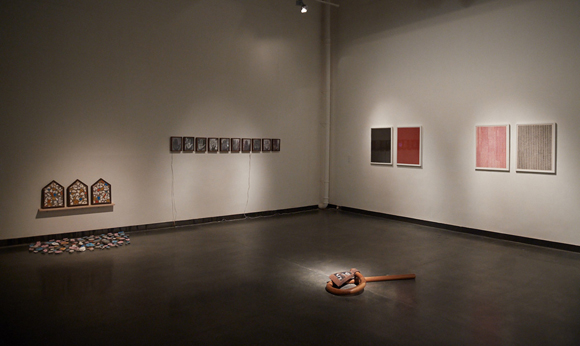
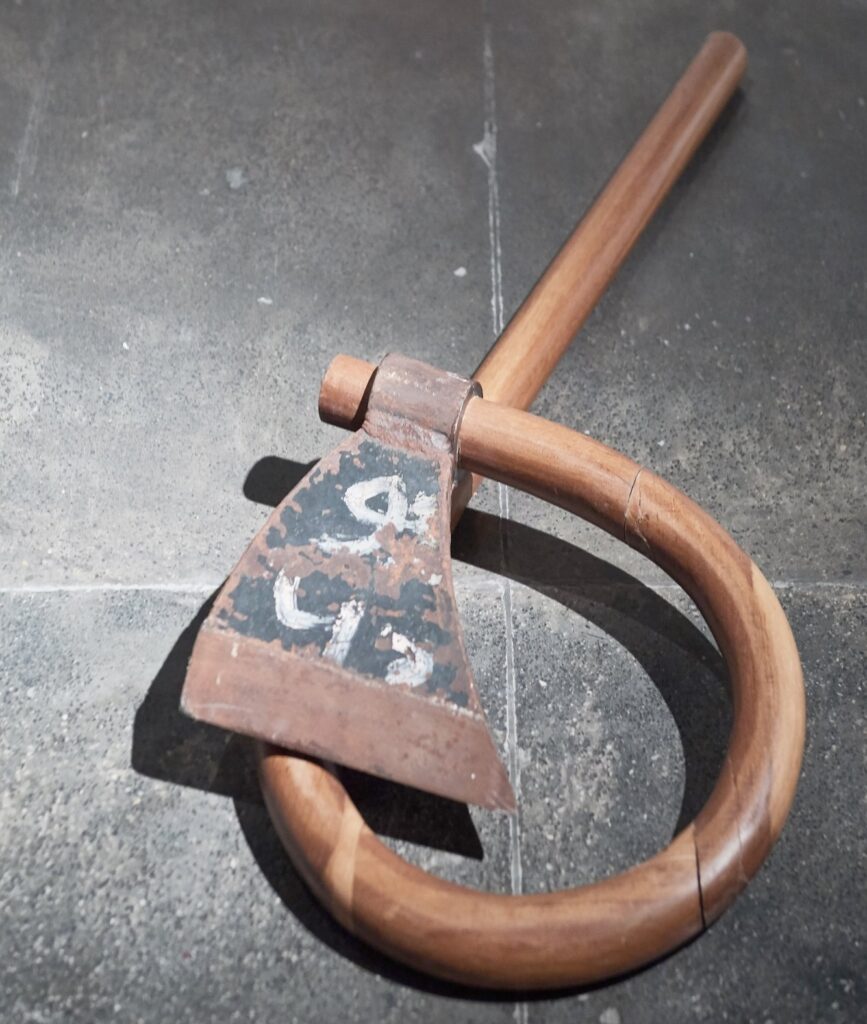
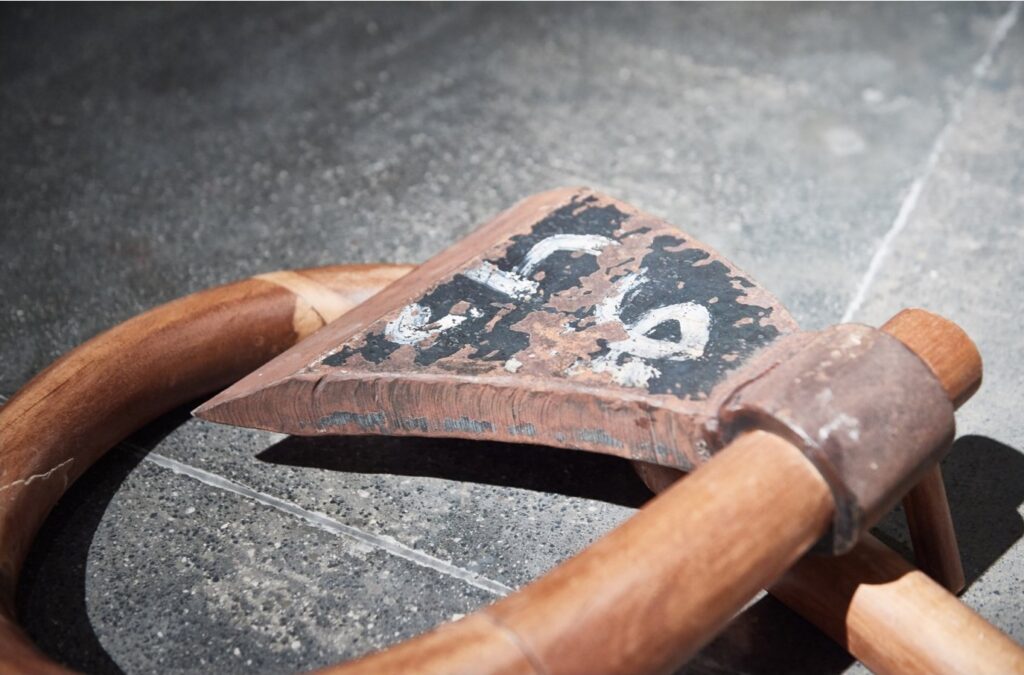
Birender Yadav twists an axe through its wooden spine that forms a loop of a knot, making the axe incapable of the inherent violence of its blade. Though the axe also represents sheer force, a tool essential to man since the age of Iron. Yadav’s father was a blacksmith in a coal mine in the eastern state of Jharkhand, India. He was encouraged by his father to pursue a career in art so that he could inherit his profession in the coal mine as an art education was believed to train the hands of a draftsman required to fashion tools. Yadav represents a refocusing of subaltern aesthetics within Indian art that is made possible through conceptual art.
An axe on one’s own foot, 2015
Iron and wood | 137 × 56 × 20.6 cm
PRESS :
Jyoti Kalsi | “The politics of resources and its consequences” | Gulf News | 1st Nov, 2018