ARTBAT FEST 11 public art project is carried out in collaboration with inDrive, an organization promoting social projects in the field of culture and art. As part of the collaboration, 8 inDrive Public Art installations will be presented.
The overall program of the festival is coordinated by the administration of Almaty city. It encompasses various projects, including community art initiatives, murals, audio installations, film screenings, and a series of projects that will continue after the festival concludes.
As part of the public art project, various areas of the city will be enriched with artistic elements, with the main focus on Baizetova Street. The intersections of Abay and Tole bi streets will host a variety of murals, augmented reality works, graffiti, and temporary installations.
Participating in the festival are artists such as Suarez Vargas Universal (USA/Kyrgyzstan), Birender Kumar Yadav (India), Renata Kaminska (Germany/Poland), Brinda Antonin (Czech Republic), Oksun Kim (South Korea), Lauren Moffatt (Australia), Saule Suleimenova (Kazakhstan), Saken Narynov (Kazakhstan), Aika Akhmetova (USA, Kazakhstan), Said Atabekov (Kazakhstan), Saule Duisenbina (Kazakhstan), and others.
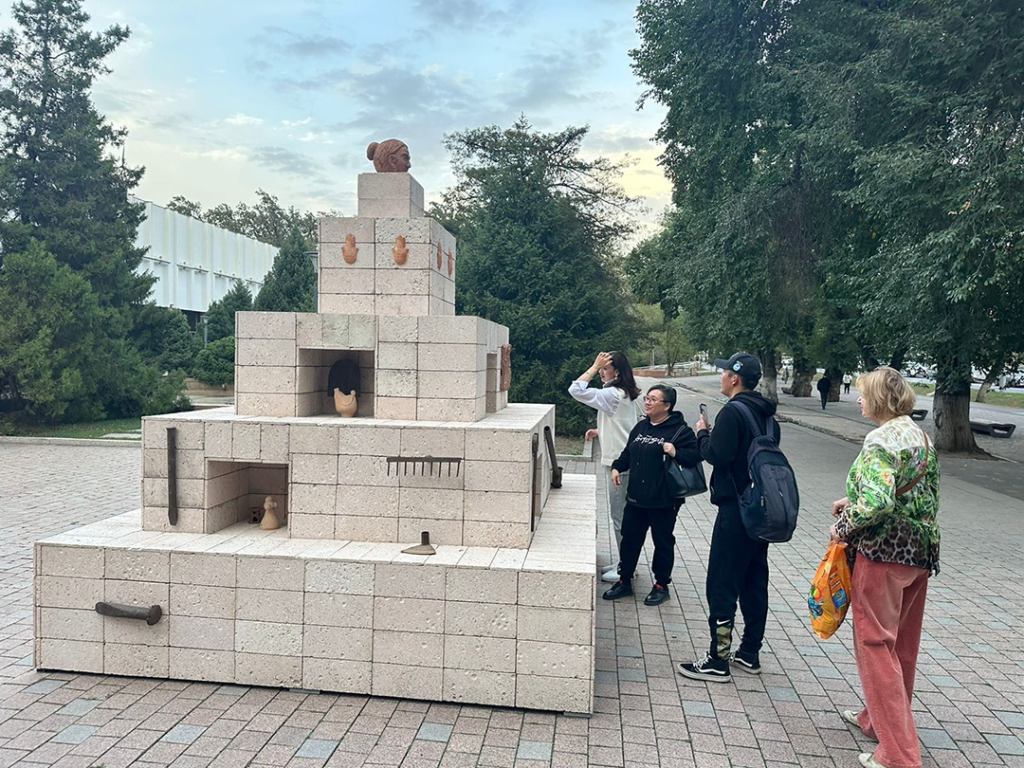
Almaty, Kazakhstan
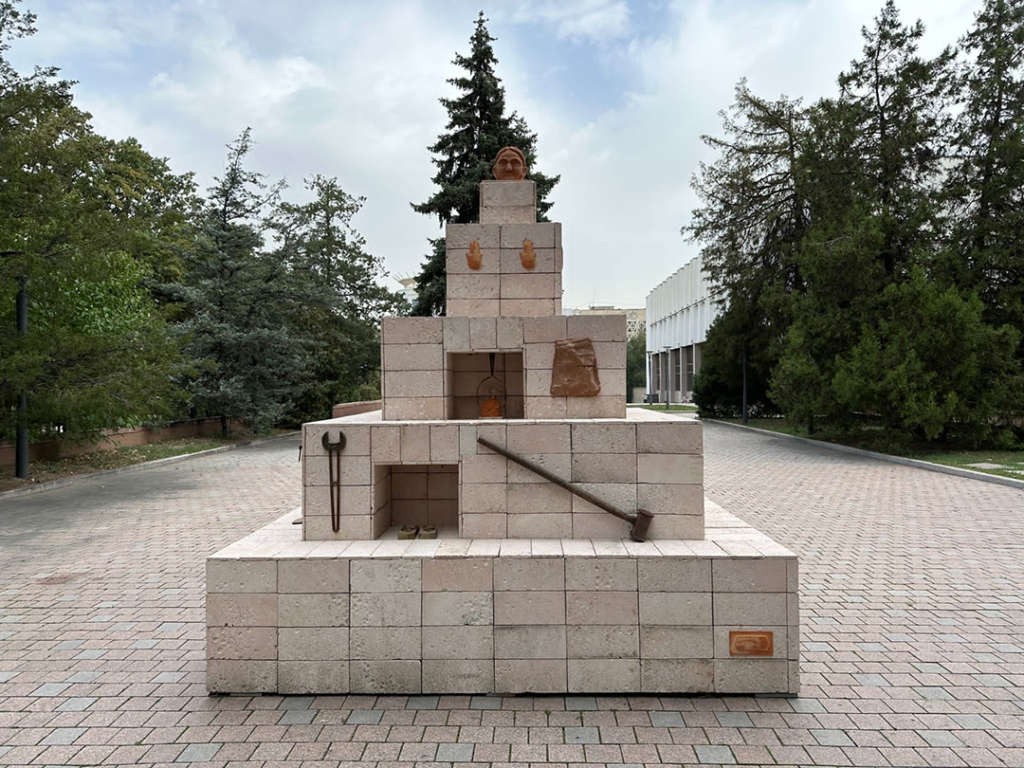
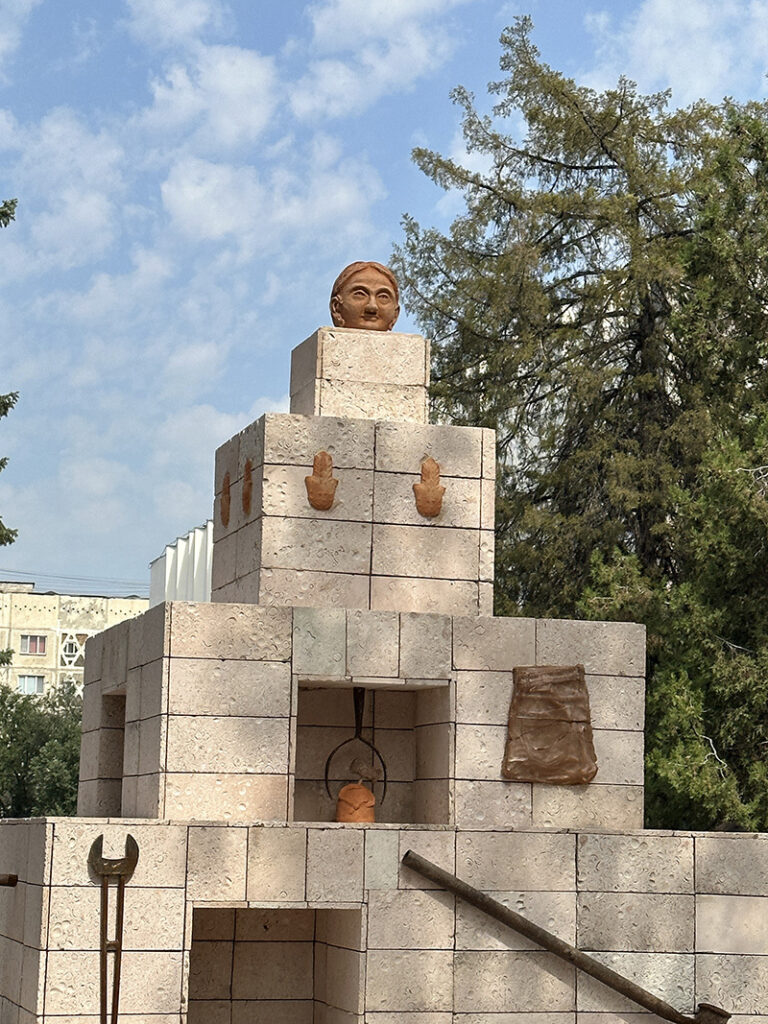
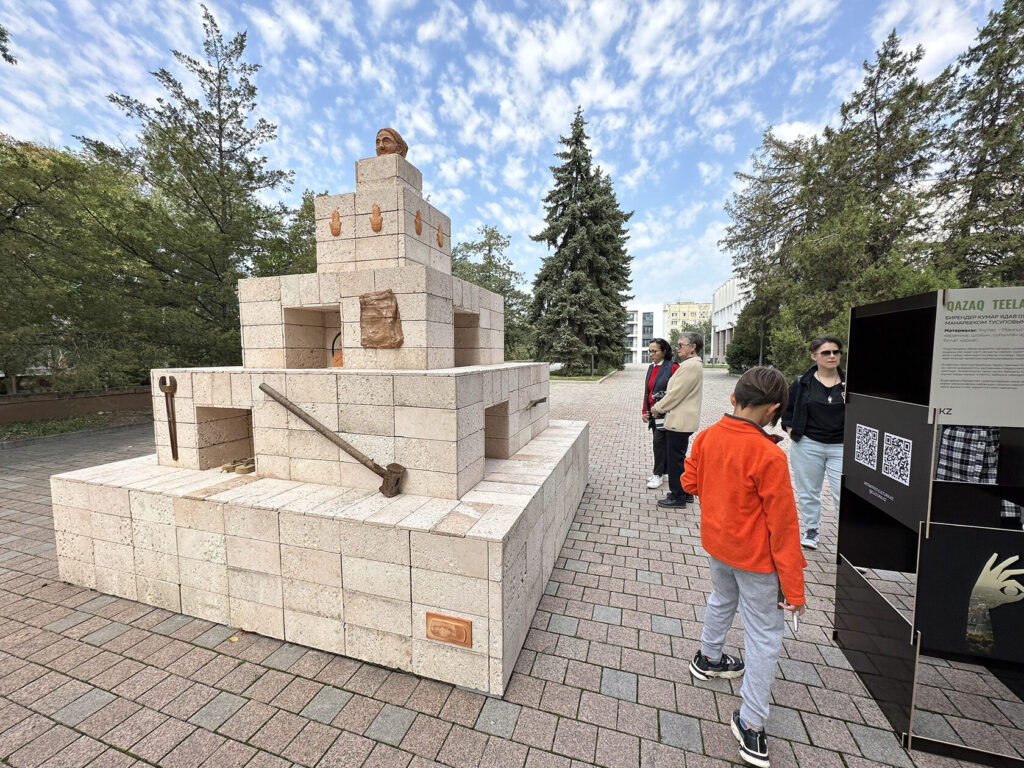
Qazaq Teela, 2023
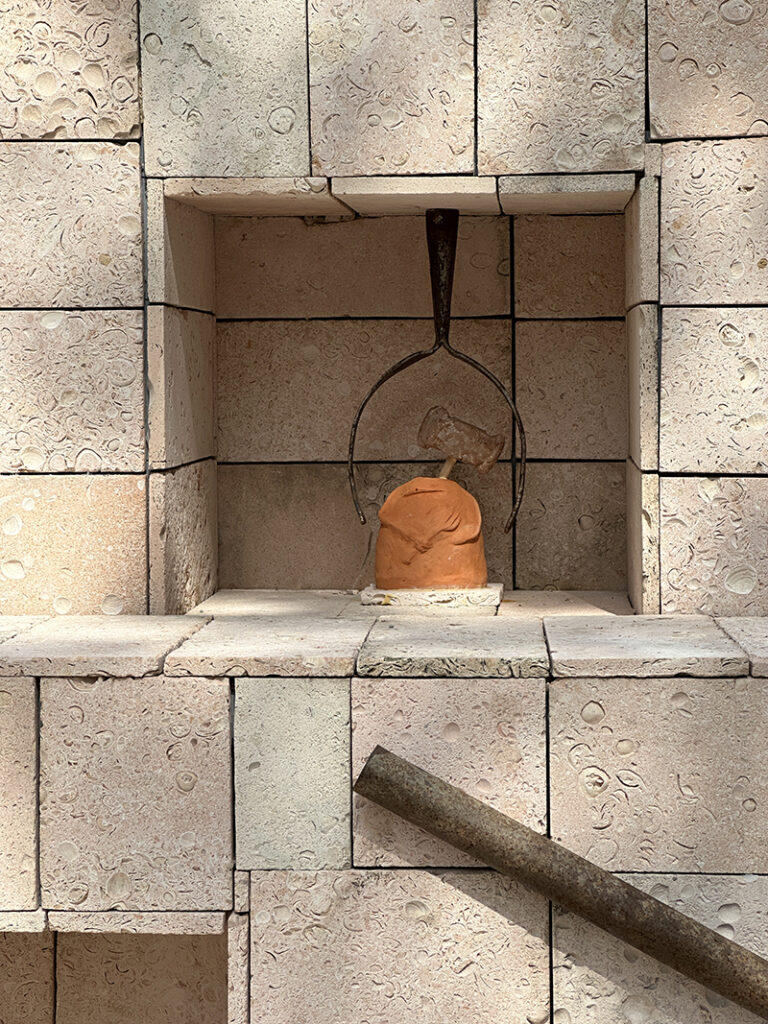
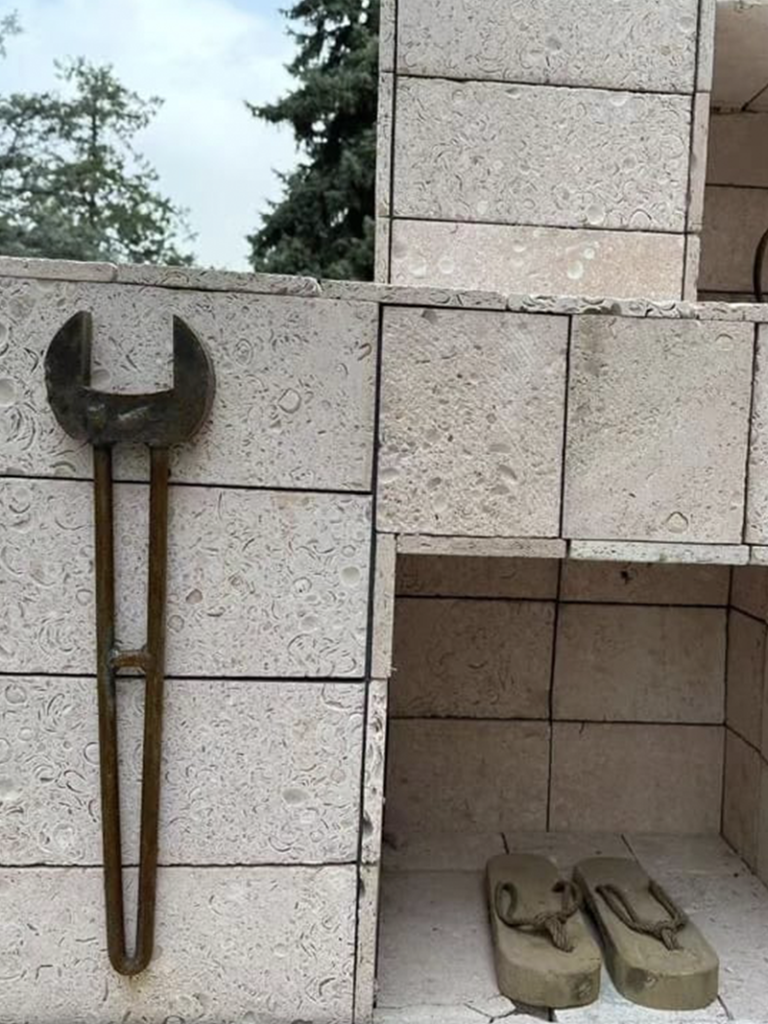
Coquina from Mangystau, terracotta, ceramic, iron cast and wrought iron agricultural and industrial tools, steel frame | 304 × 304 × 365 cm
Birender Kumar Yadav, an artist from a coal mining town in India, documents the lives of displaced indigenous people who work in brick kilns. These workers, often migrants, live transient lives without national identity cards, making them invisible to the state. The “Qazaq Teela” monument serves as a memorial to their unrecognized labor and the struggles of marginalized, undocumented workers worldwide.
The monument is constructed from Coquina, a sandstone made of ancient shells, symbolizing the deep history of exploitation. It also features tools from the Soviet era, highlighting the impact of failed industrial experiments on migration patterns. The terracotta head of a Santhal-Munda indigenous woman crowning the monument represents the millions of women working in essential but underpaid roles, often excluded from organized labor.
Birender’s collaboration with craftsmen from Kazakhstan and a Russian translator illustrates the global nature of the labor issues he addresses in his art, emphasizing the need to reflect on and work towards equity, decolonization, and gender parity.