LB03’s gathering of artists from South and Southeast Asia and beyond thus addresses urgent topics in a region that in recent years has seen calamitous floods and degraded environment aggravated by agricultural disasters, urban pollution, and social inequality. These problems, which now cannot be ignored, have long been in gestation. The exhibition will feature contributions by artists that suggest aesthetic, sensorial, conceptual, and collective ways to address such challenges, while also underscoring resonances between the histories of Lahore and Pakistan, with other parts of the world that face similar issues.
Free and open to the public, the Biennale commences on Saturday, 5th October, and will run through Friday, 8th November, complemented by a number of collateral exhibitions and programs scattered all over the city. During the opening weekend (5th – 7th October), in addition to experiencing the Biennale and other shows, visitors will have the opportunity to partake in a number of special events, including private collection viewings, studio visits, artist talks and programs, live performances, and other cultural events (such as heritage and culinary tours) across the city. The guests will be able to fully enjoy Lahore’s famous hospitality.
For its closing program (2nd – 8th November), the Biennale builds on the solidarity of these parallels by convening a mix of leading and emerging researchers, artists, curators, and other practitioners for the Climate Congress, which under the stewardship of Iftikhar Dadi and John Tain, offers an occasion for South-South conversations around the role of the arts and humanities to meaningfully contribute to wider efforts to build. The Climate Congress is supported by a grant from the Getty Foundation.

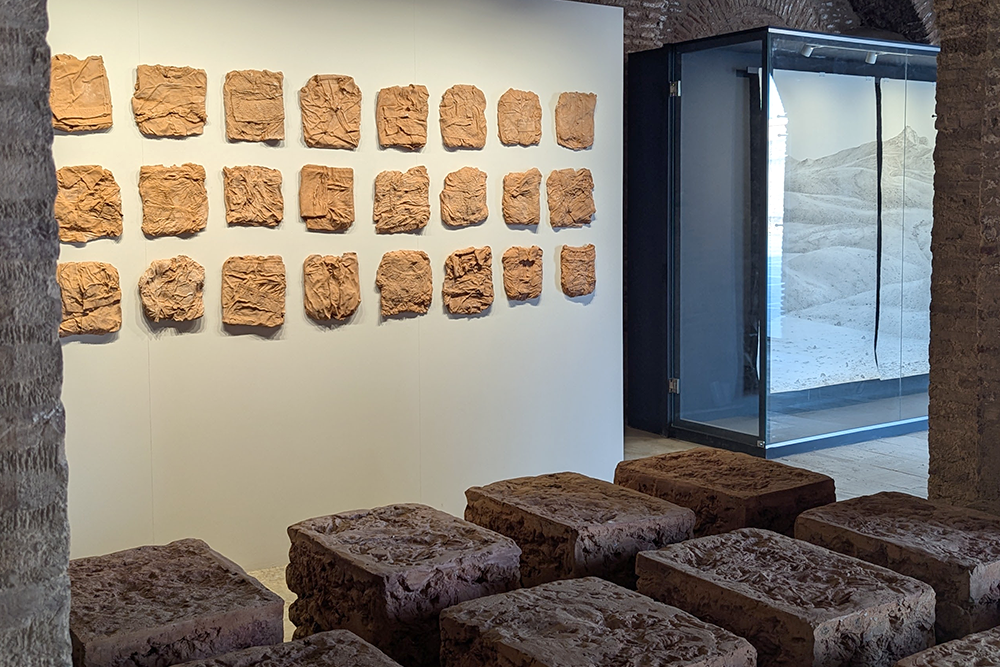
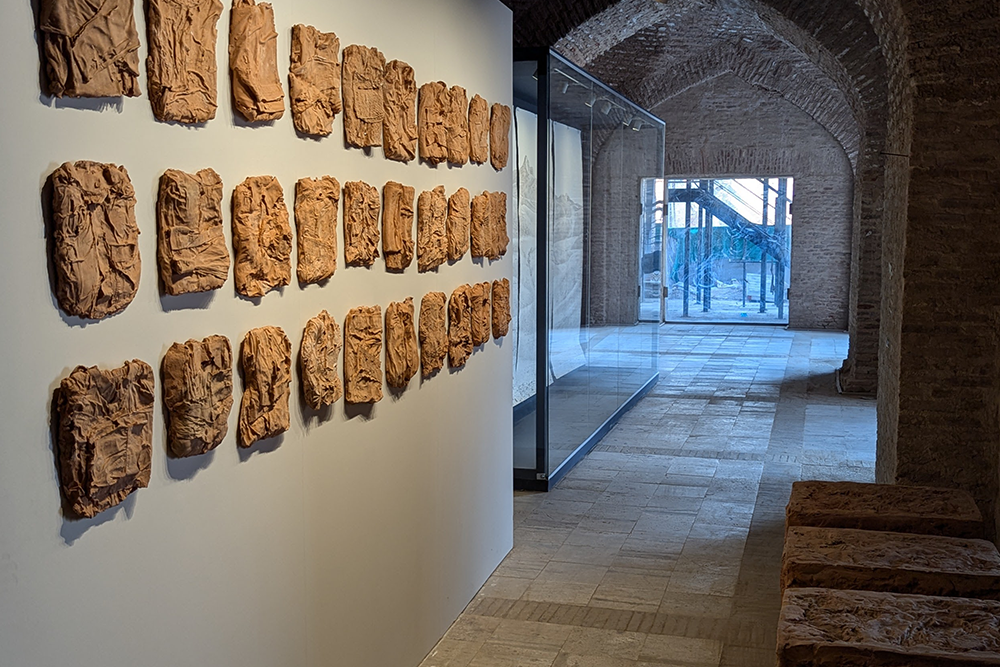
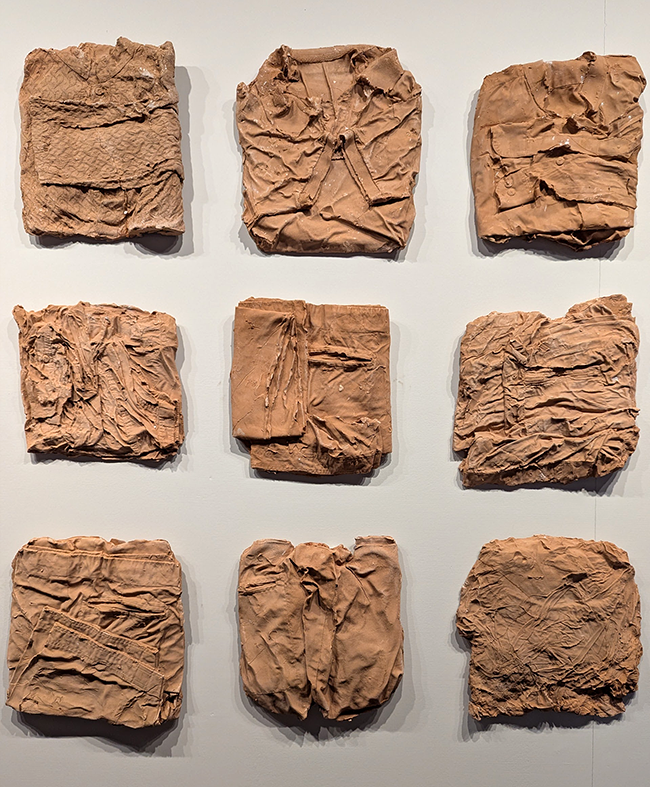
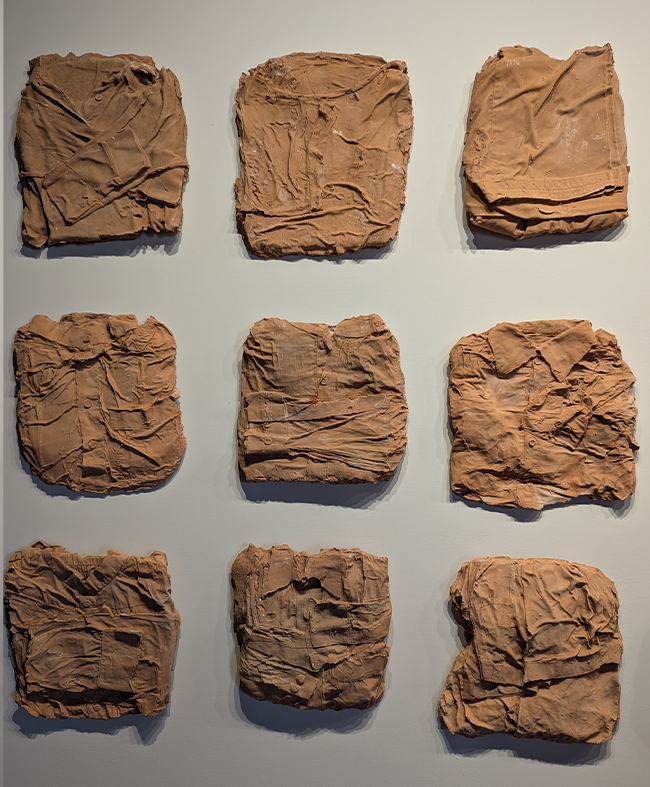
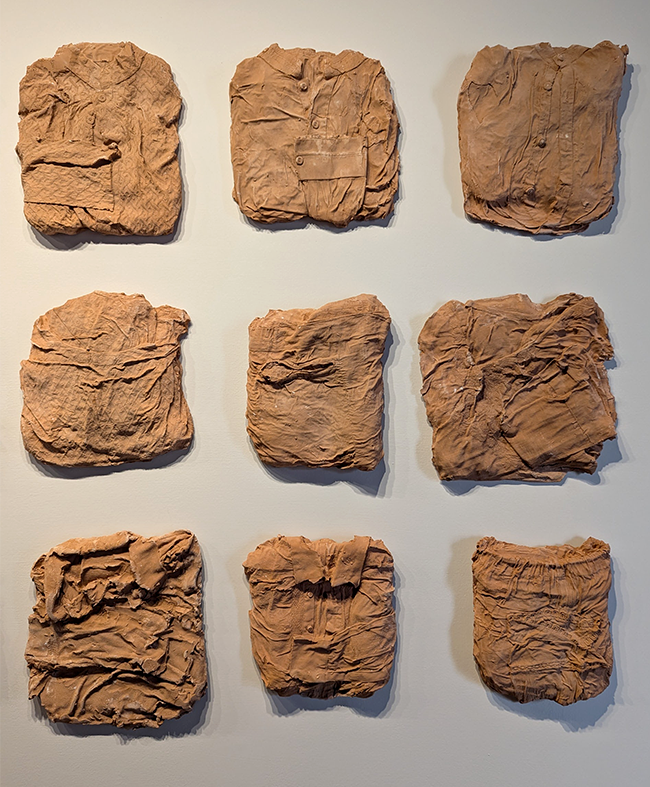
Cast-e Brick, 2024
Terracotta | Variable
Caste Brick grows out of Birender Yadav’s work with brick kiln workers and their families, an often exploited community on the Subcontinent. In spending time with the workers in the brickmaking industry in Mirzapur, Eastern Uttar Pradesh, the artist learned about a complex socio-economic system that brought together marginalized groups of landless bonded laborers from different religious and ethnic backgrounds specialize in different tasks of production. Attempting to monumentalize this vernacular aesthetic while bringing back to mind the “sweat of labor,” Caste Brick stands as a contrast of its two parts. The larger part consists of a dozen large-size terracotta blocks molded from brick makers’ clothes, arranged in a grid. Crushed together during the casting process, the clothes become so much undifferentiated stuff, much like how the workers themselves are treated. Meanwhile, meeting the viewer at eye-level are thirty molds of individual pieces of clothing, which suggest, however, subtly, the intact personhood of each of their former owners. Caste Brick thus juxtaposes the socio-economic and environmental impact of brick-making, while underscoring the cross-border ties between India and Pakistan.