The sixth edition of the Kochi-Muziris Biennale is an invitation to embrace process as methodology, and to place the friendship economies that have long nurtured artist-led initiatives as the very scaffolding of the exhibition.
We move away from the idea of the Biennale as a singular, central exhibition-event, and instead envision it as a living ecosystem; one where each element shares space, time, and resources, and grows in dialogue with each other. In Kochi, a historic port city where trade once connected distant worlds, we begin with our site and region to engage in dialogue with emerging global perspectives. This rootedness allows us to resist the pressures of the conventional biennale model as a finished spectacle, and instead shape something that is evolving, responsive, and alive.
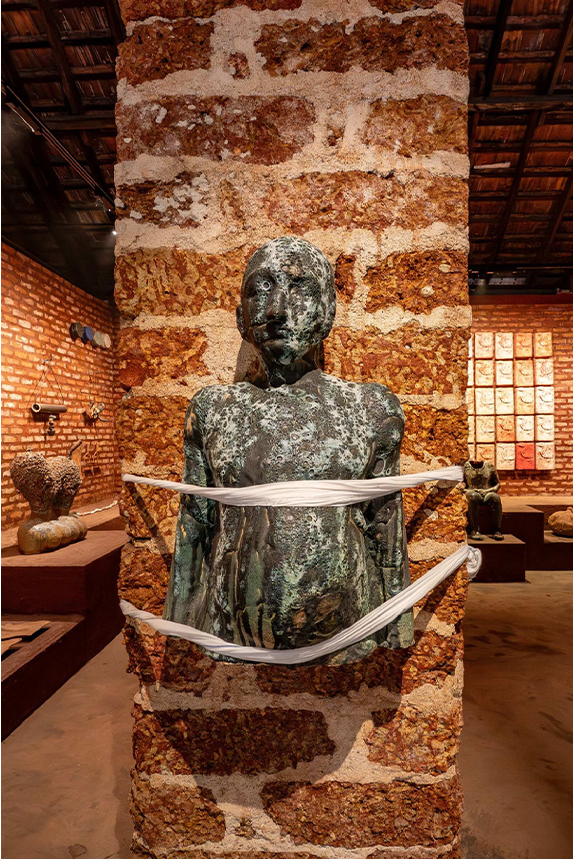
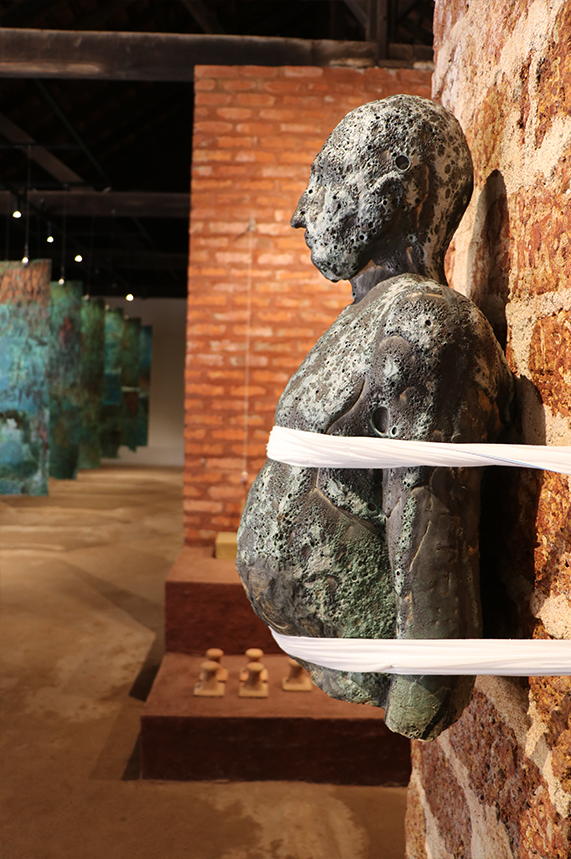
Our inquiry begins with the body–chemical, tender, marked by memory and intimacy. We see the body as a landscape of time, a vessel of labour, joy, and loss. From these bodies emerge processes that transform into other bodies as extensions of ourselves through which meaning is carried and reality reimagined. In this convergence, we invite a deeper awareness of being, and plant seeds for a more caring and conscious future.
Our bodies are not entirely ours; they are cultivated like landscapes, by those that tend to it with care or its lack. They bear witness and record experiences as scars and marks, and time as lines. Our bodies hold hope and grief, whilst seeking love and joy for survival and sustainability. This edition of the biennale is also an invitation to think through embodied histories, of those that came before us and continue to live within us in the form of cells, stories and techniques.
Aware of the ecological, political, and emotional precarity of Kochi, not as a limitation but as a generative force, we let its rhythms shape how we work. We invite artists to seek resonances across geography and time, to trace shared memories, mirrored struggles, and new affinities rooted in empathy and deep listening.
We would much rather learn from the complexities of human history, choosing to confront the contradictions and fragilities of our present. While we recognise that art alone may not change the world, we believe when cultures collide, that encounter can, at the very least, provoke conversations. This constant unsettling can possibly break the static silence, even if temporarily.
In the aftermath of a global pandemic, we are more attuned to the space between performance and witnessing, between presence and absence. The saturation of digital images and information has distanced us from the world and from each other. In these times of war and regimes, what does it mean to watch and witness? What does a call to action might mean or look like in a world desensitised by voyeuristic tendencies and mediated content production?
Many forms of liveness—performances, actions and conversations—will bring alive the 110 days of the Biennale. Durational works that blur process and presentation will invite audiences into embodied, participatory moments, challenging a static exhibition. We believe this is what a Biennale can be: a space of aliveness, presence, and communion. A place where people come together, not just to see art, but to be with it, and with each other.

Aspinwall, Kochi Biennale, 2025 – 2026
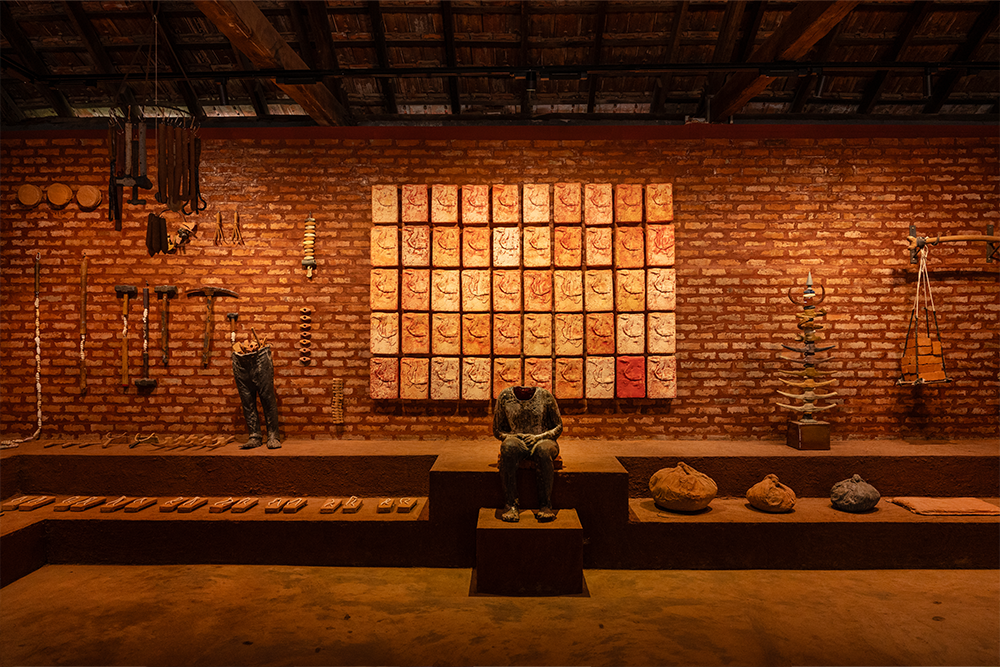

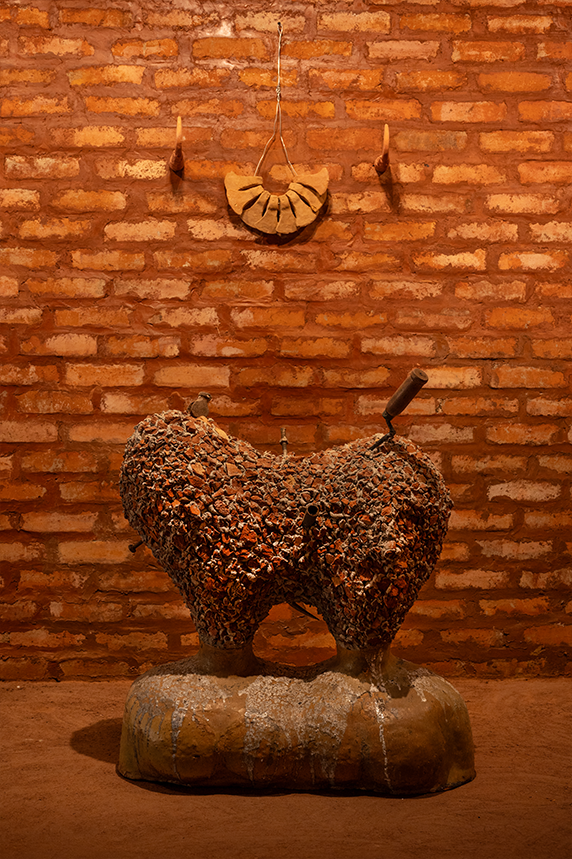
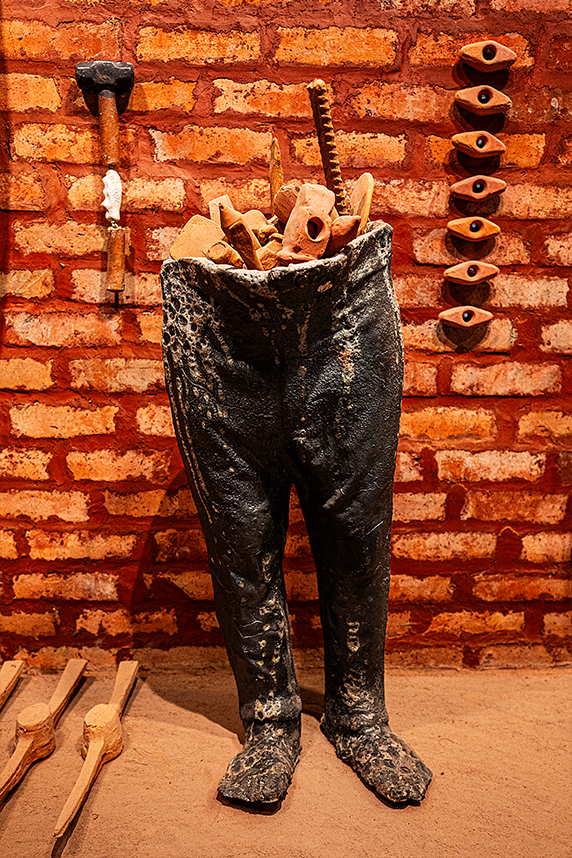
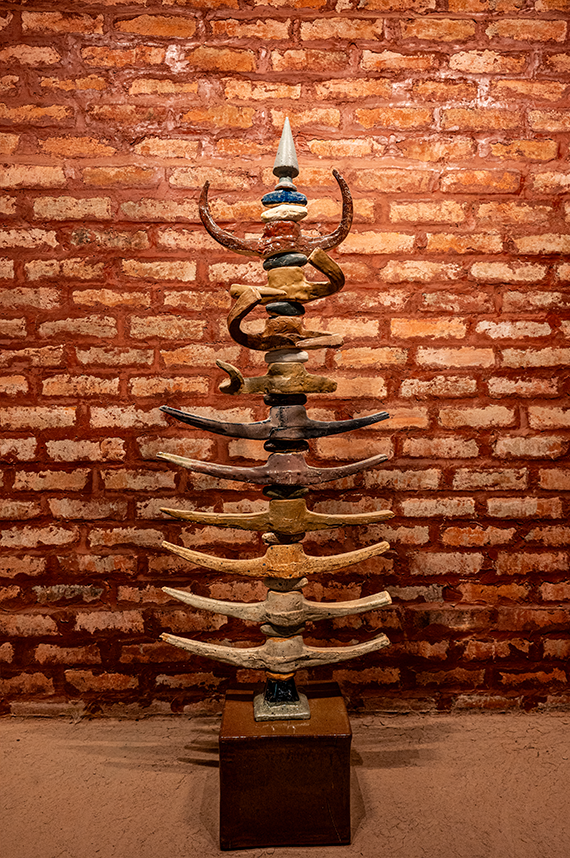
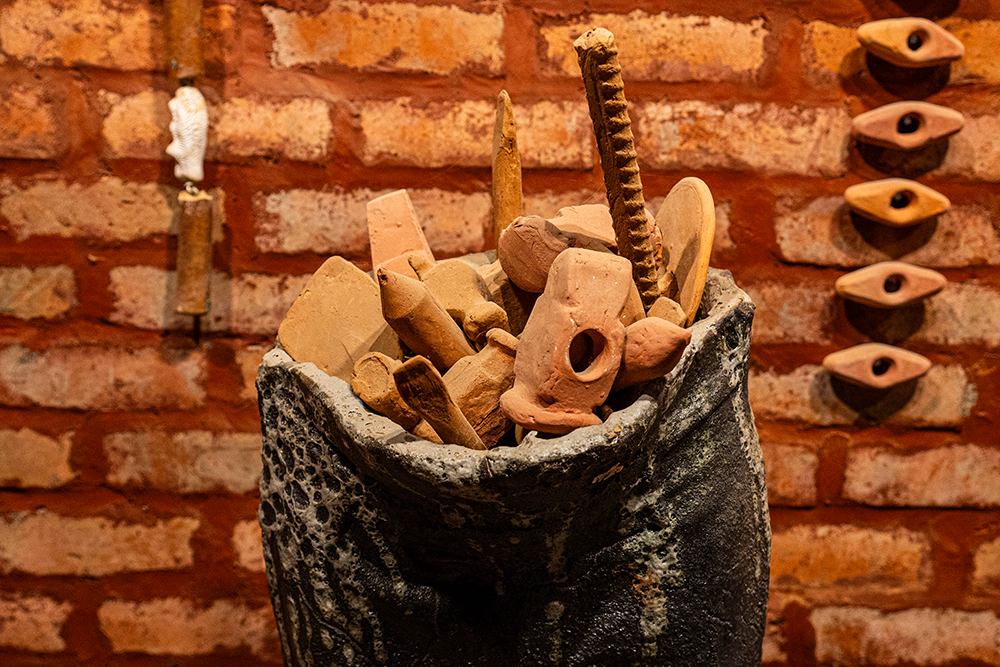
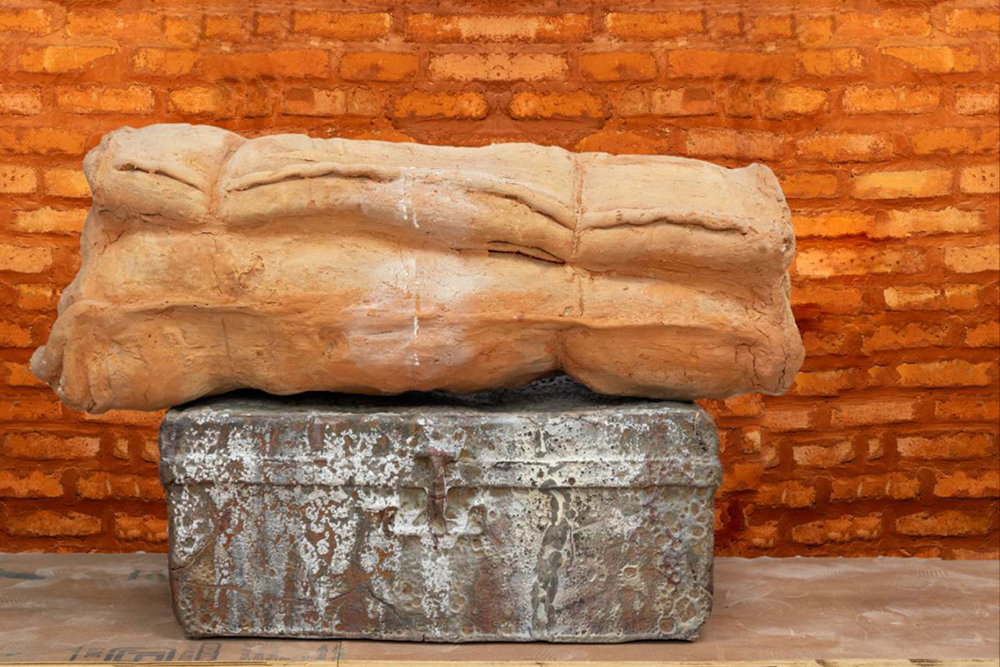
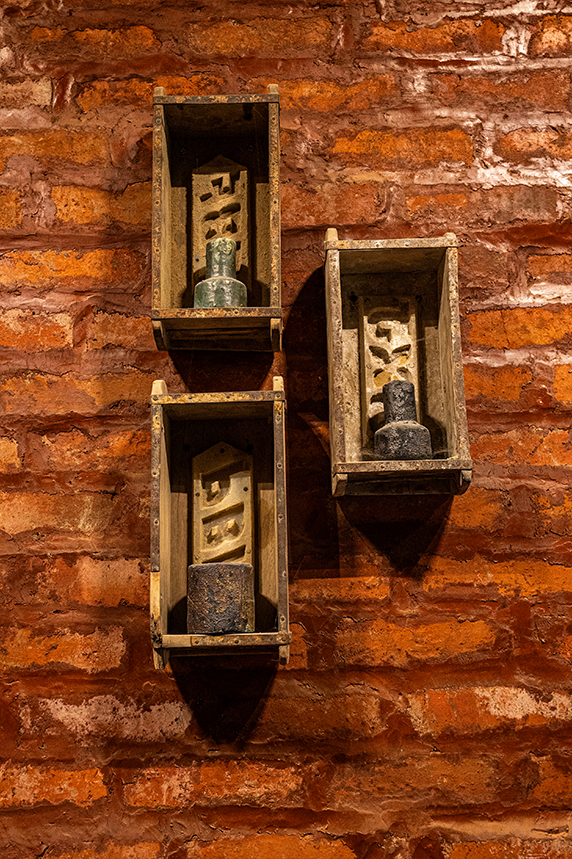
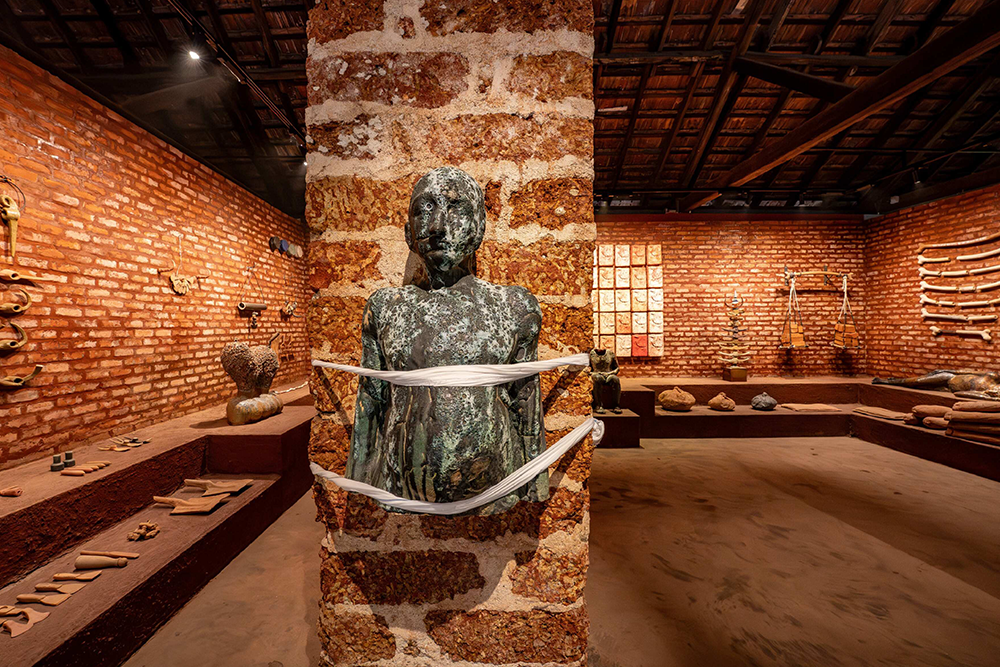
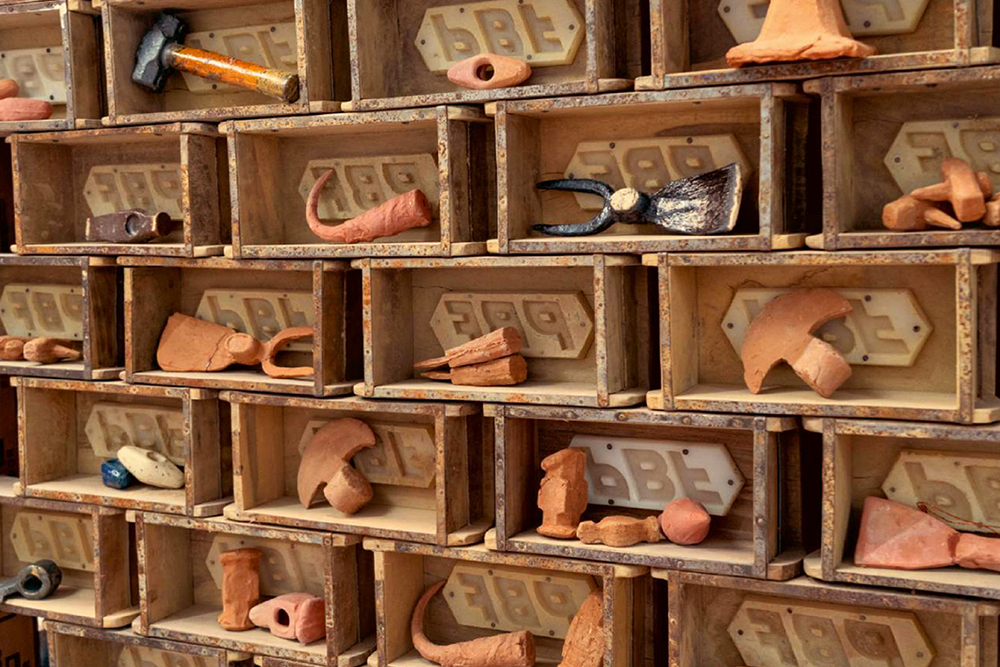
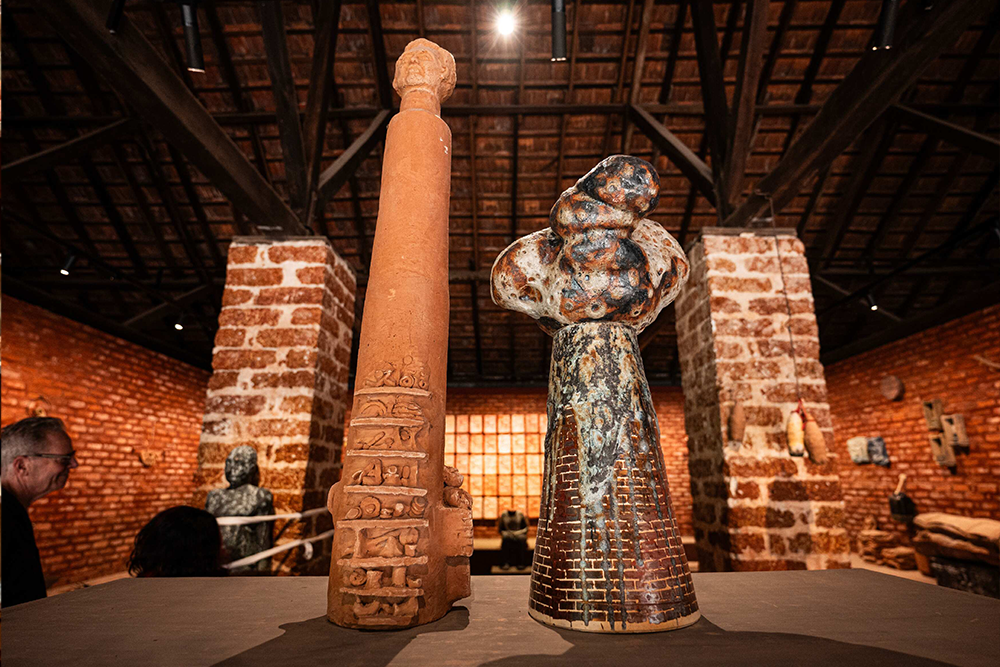
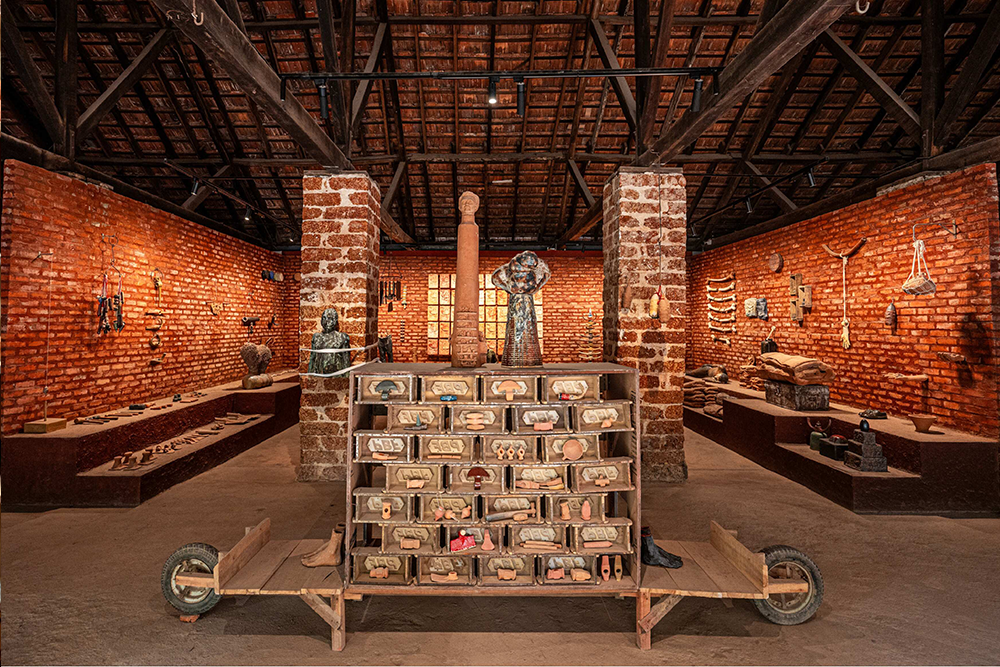
ONLY THE EARTH KNOWS THEIR LABOUR, 2025
Brick, brick making materials, terra cotta, stoneware & mixed media | Variable
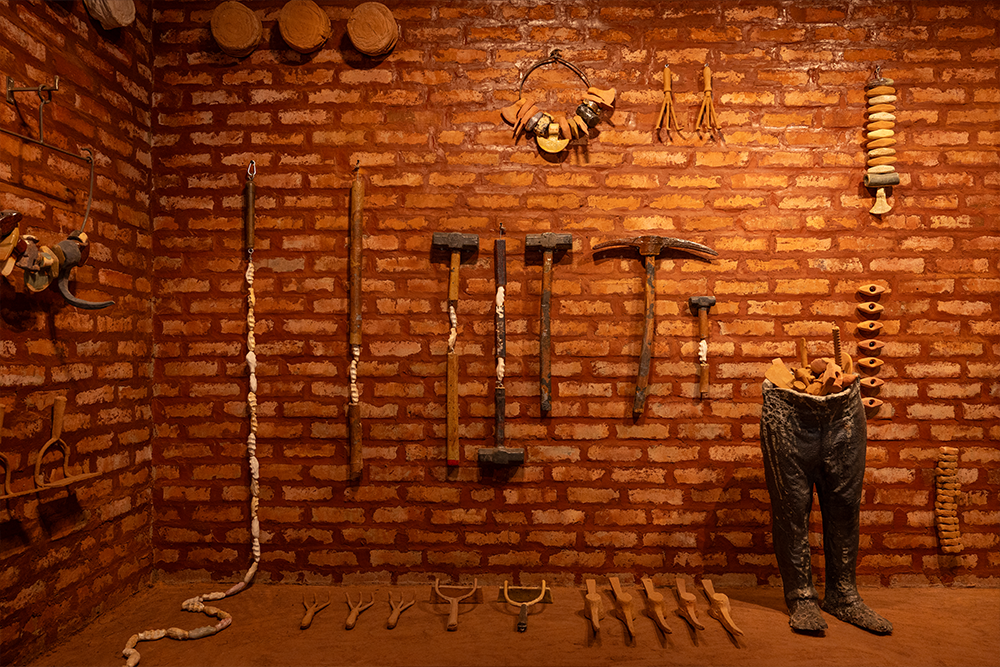
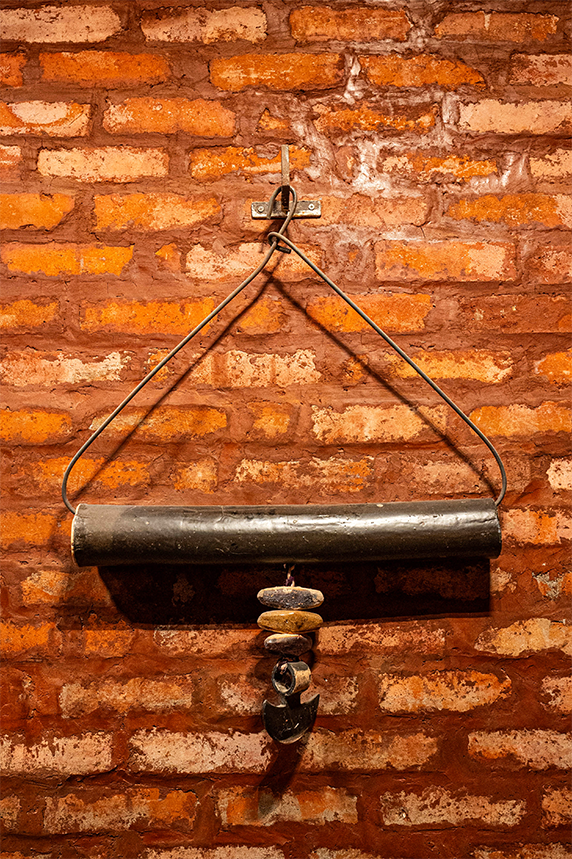
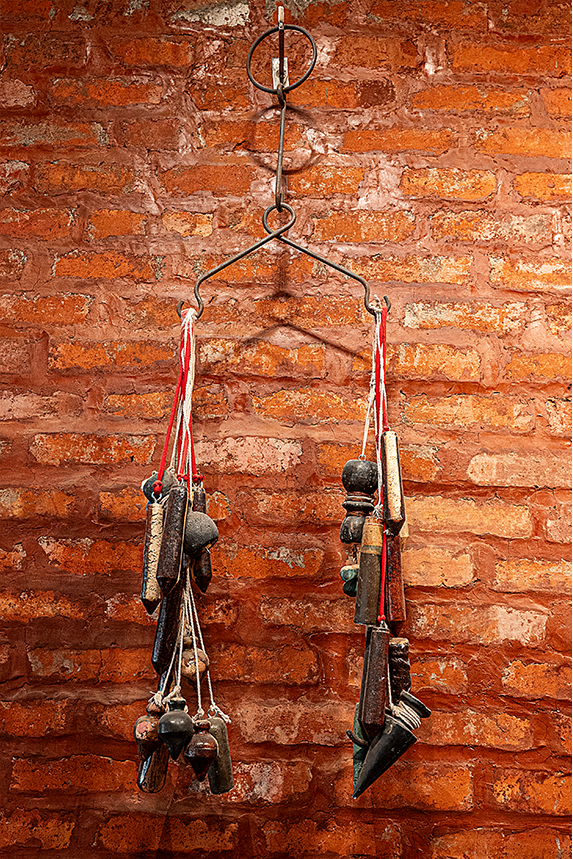
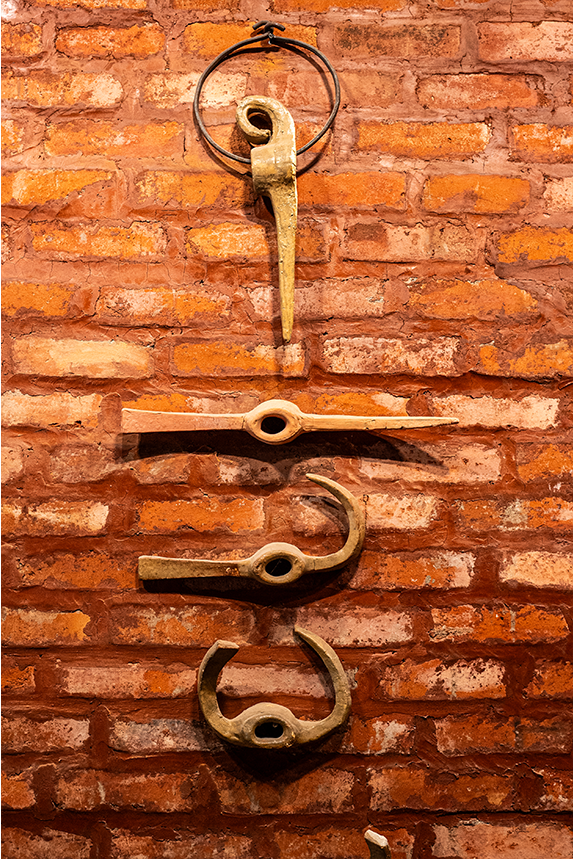
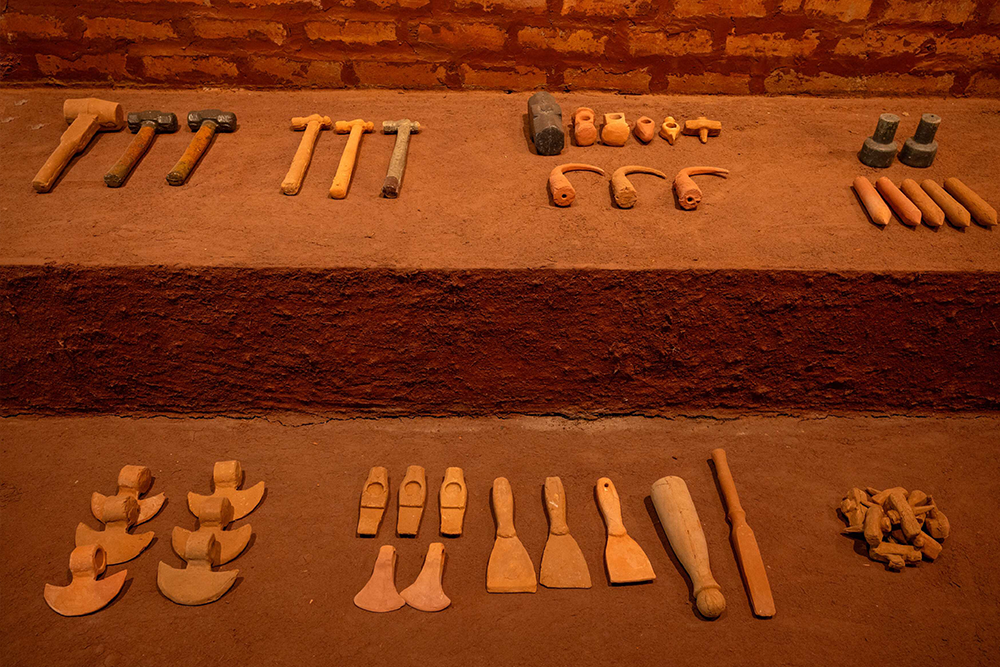
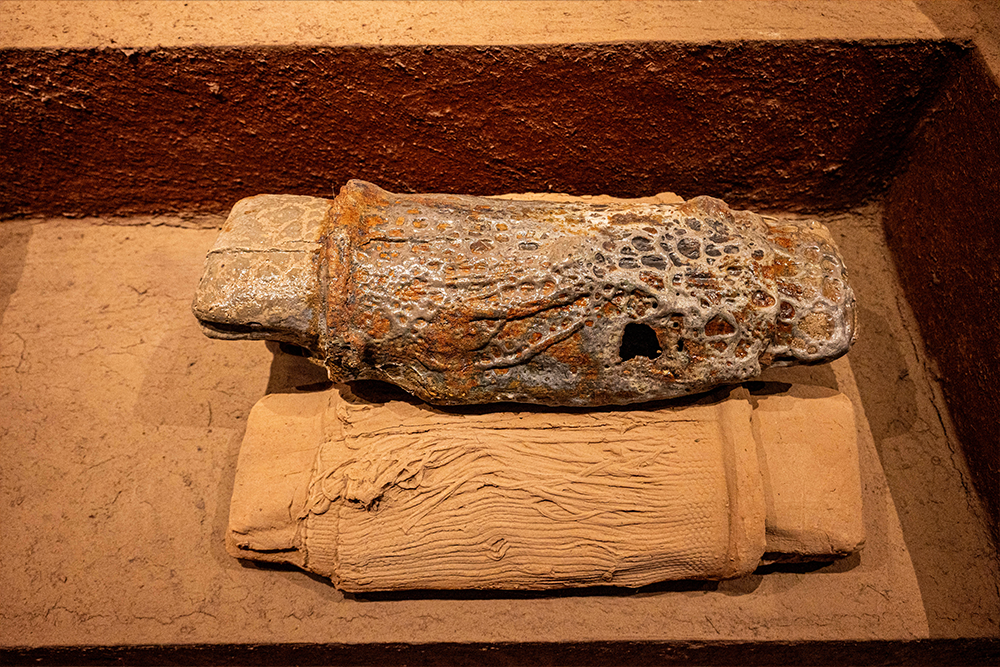
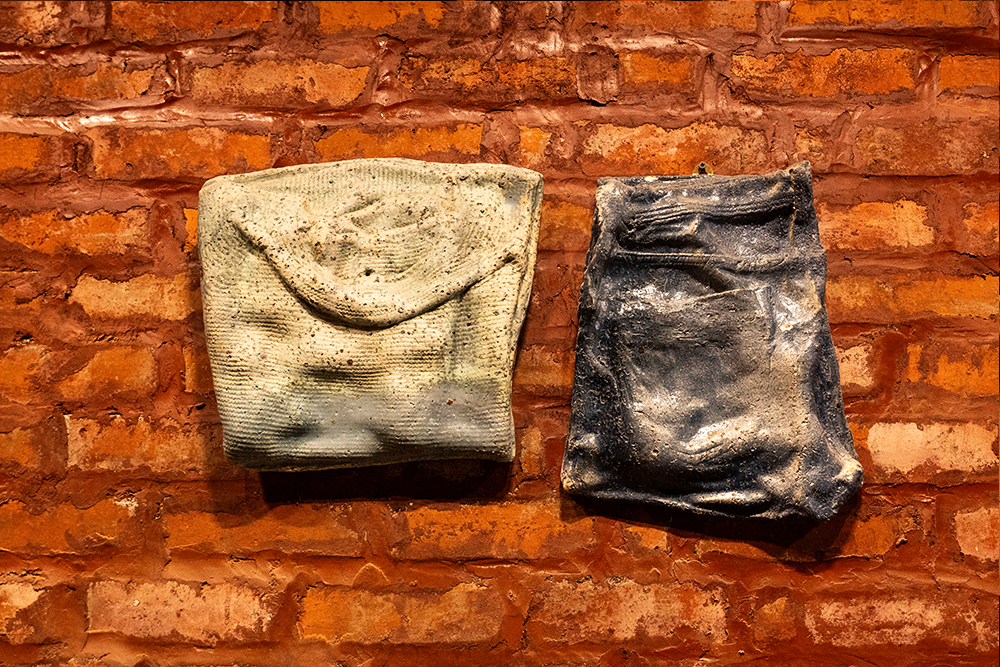
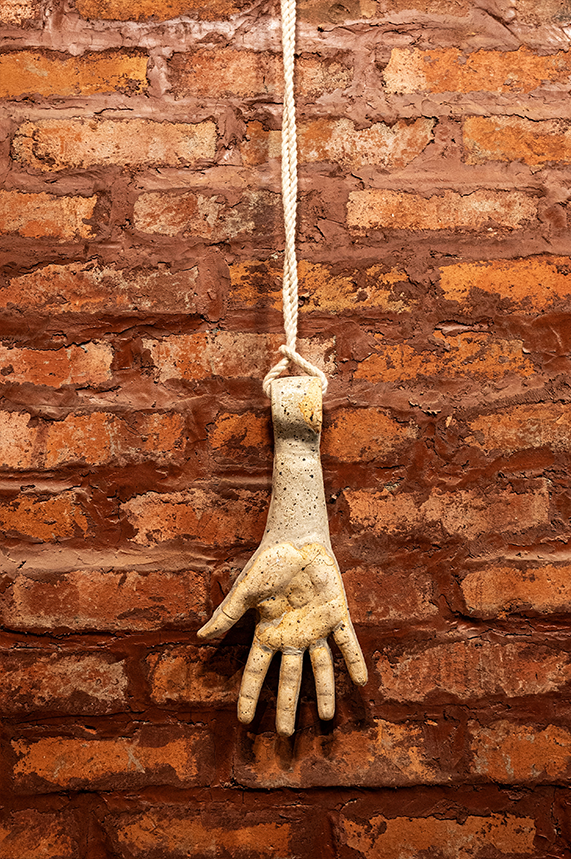
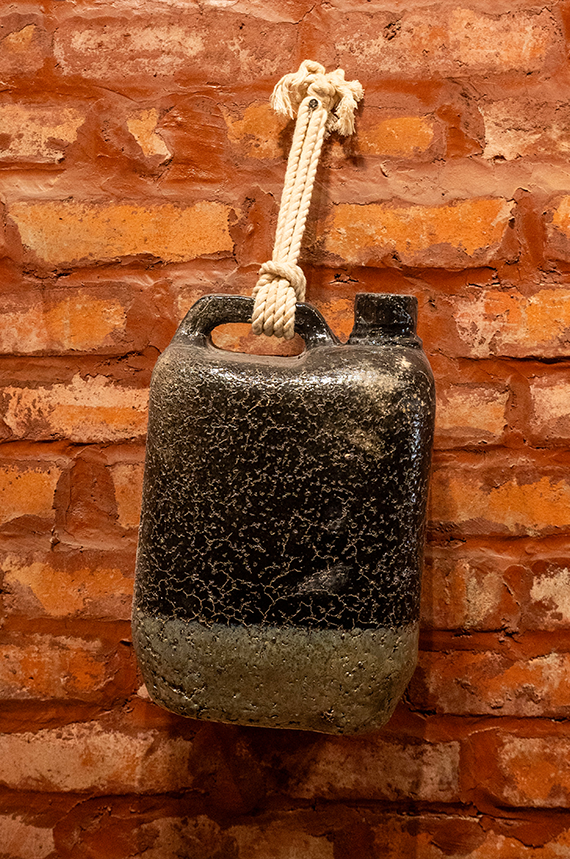
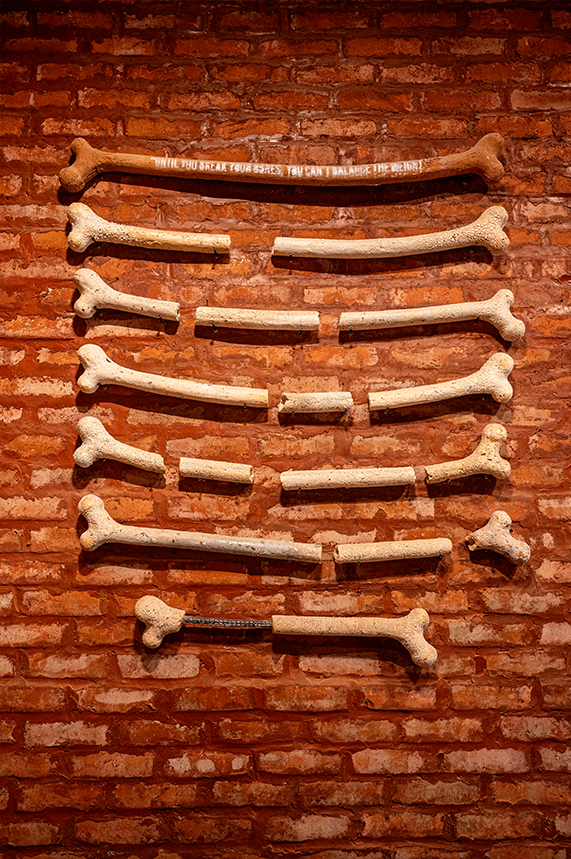
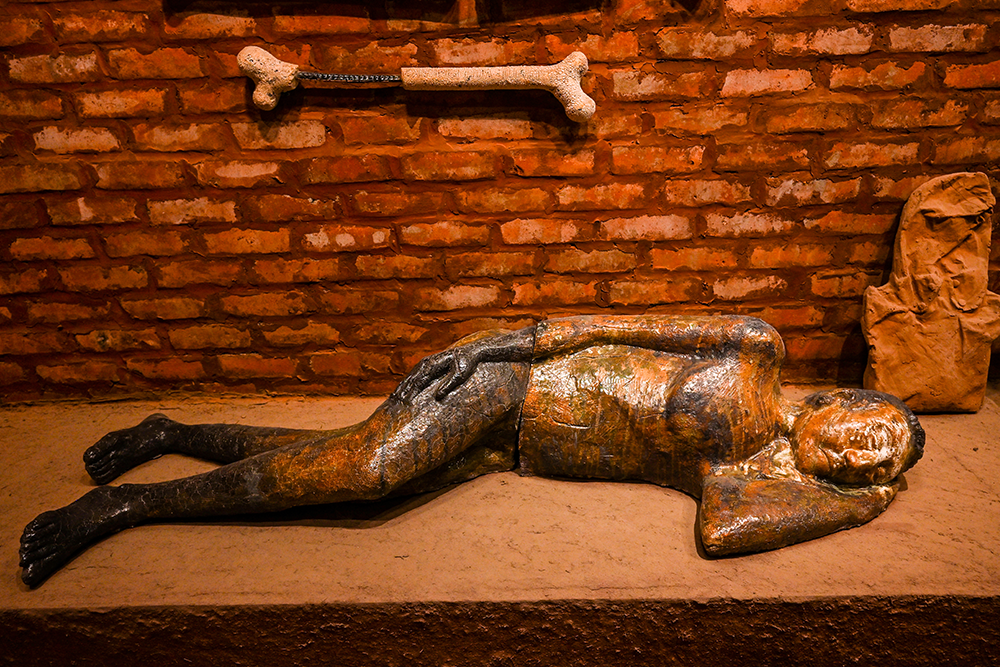
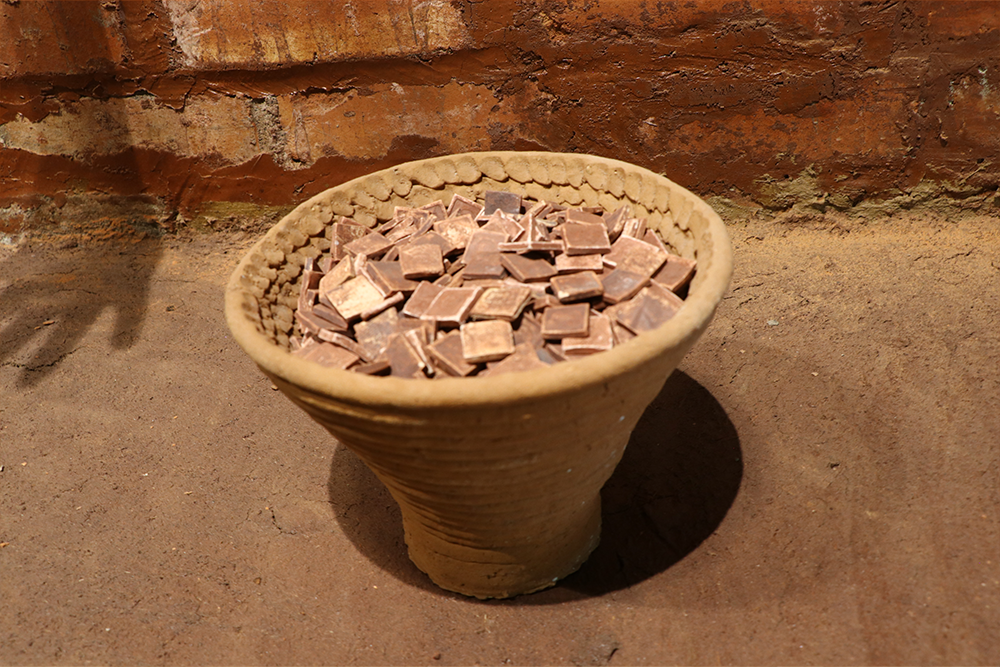
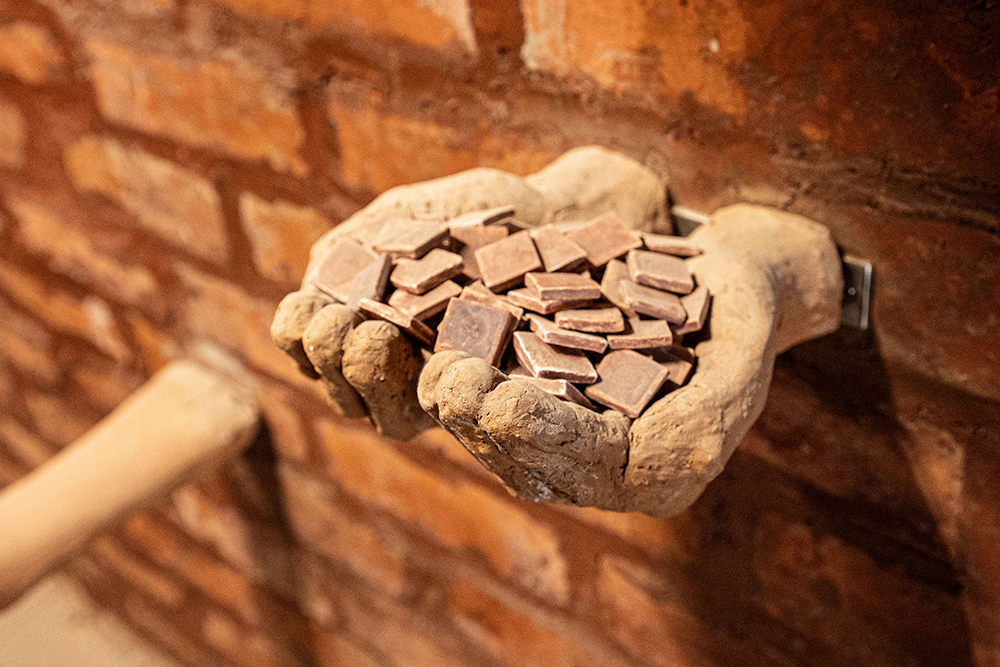
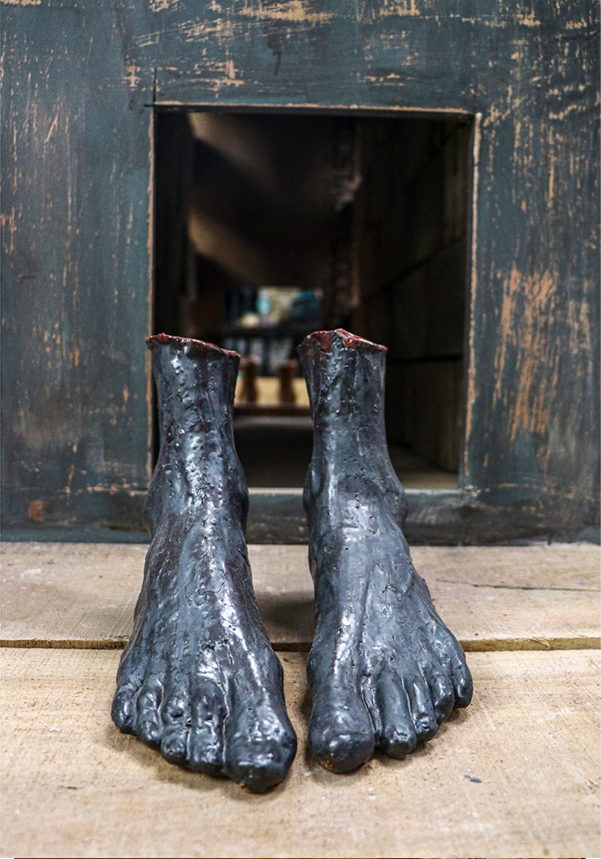
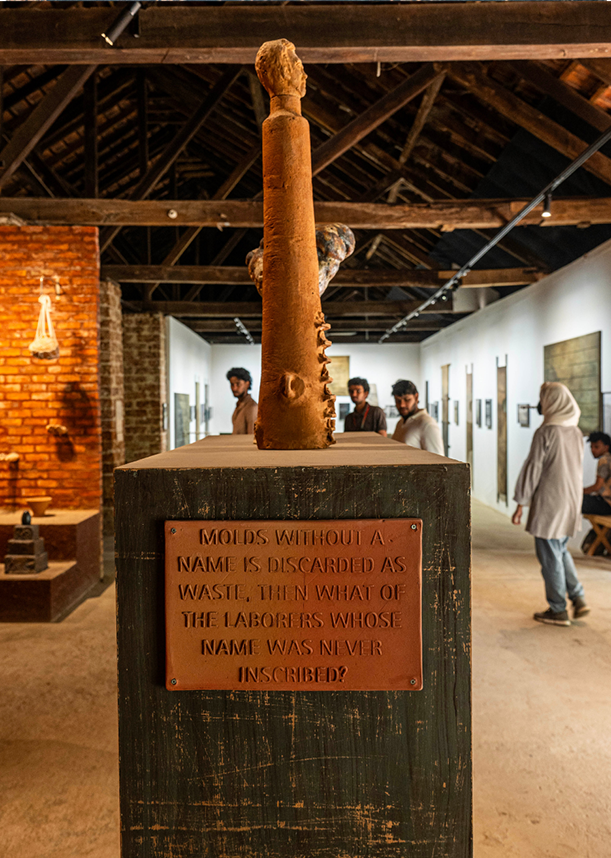
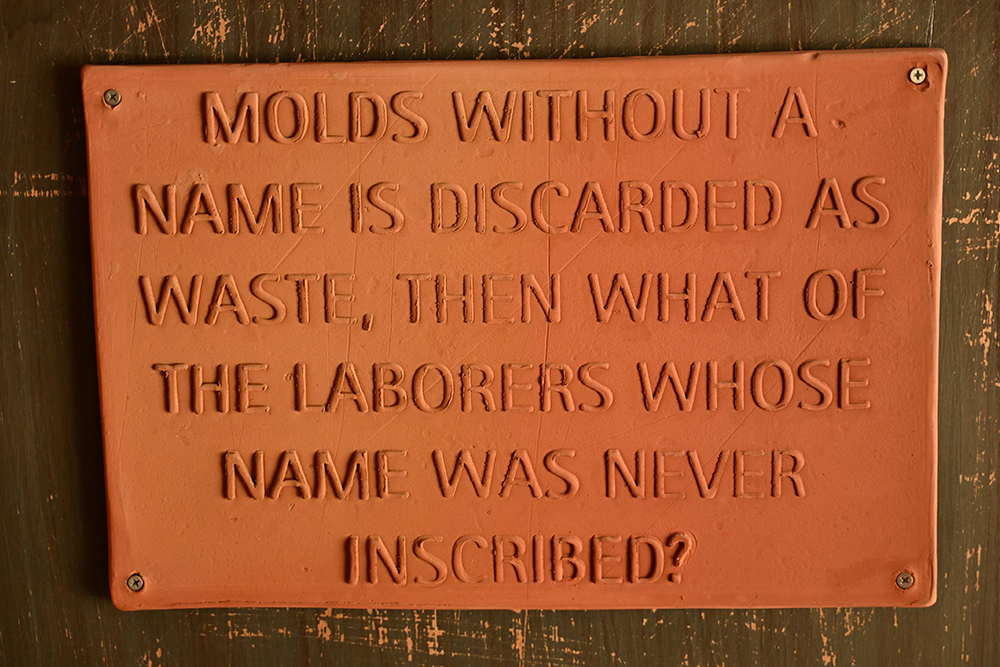
The lives and labour of seasonal migrant workers—particularly those working in brick kilns inMirzapur, Uttar Pradesh—inform the fundamental concerns of Birender Kumar Yadav’sartistic practice. Currently based in Delhi, he reflects on the living and working conditions oflandless bonded labourers caught in a complex socio-economic system of extraction andexploitation. Through works in the mediums of installation, painting, sculpture, andphotography, he reinterprets the many layers that shape these experiences, re-framing thematerials, tools, and processes to contemplate questions of identity, migration, language, casteviolence and the exploitation of labour.Only the Earth Knows Their Labour (2025) reconstructs the atmosphere and structures of a kiln,without the workers. Only the intensity of their labour remains visible, through an encirclinglandscape of brick walls and steps. The overwhelming uniformity and volume of the brickssignal the pressure of the continuous, strenuous labour expected from the workers during theworking season from November to June, after which their temporary homes on the site aredemolished and the kiln is shut down. The air is heavy with the absence of those who createdthe space. The palm prints pressed into each brick recall their bodies. The terracotta casts oftheir everyday belongings left behind in the temporary homes are dispersed as oblique,biographical fragments throughout the installation.
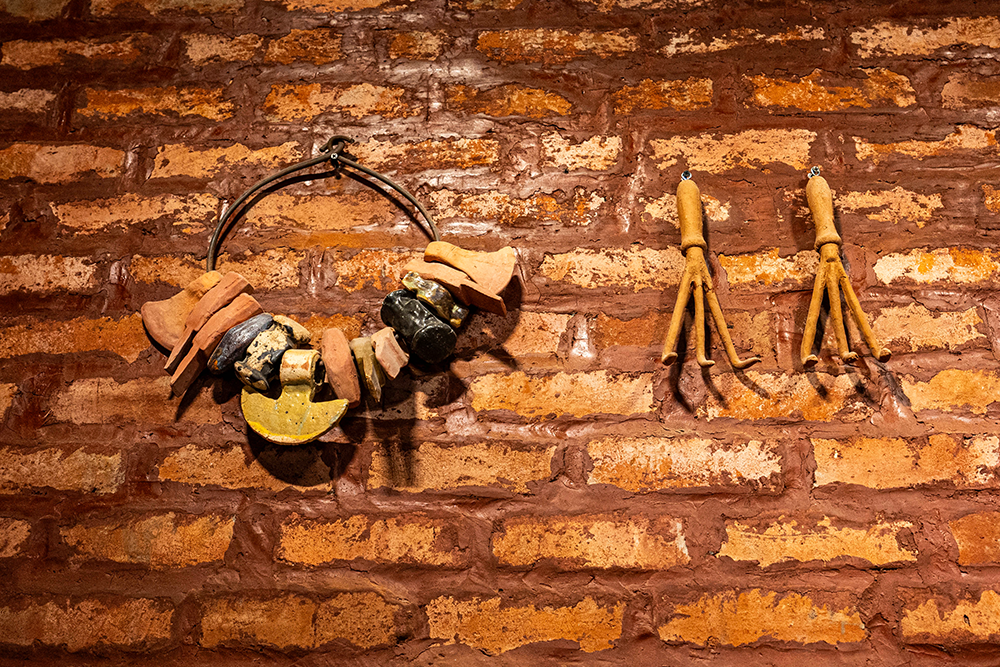
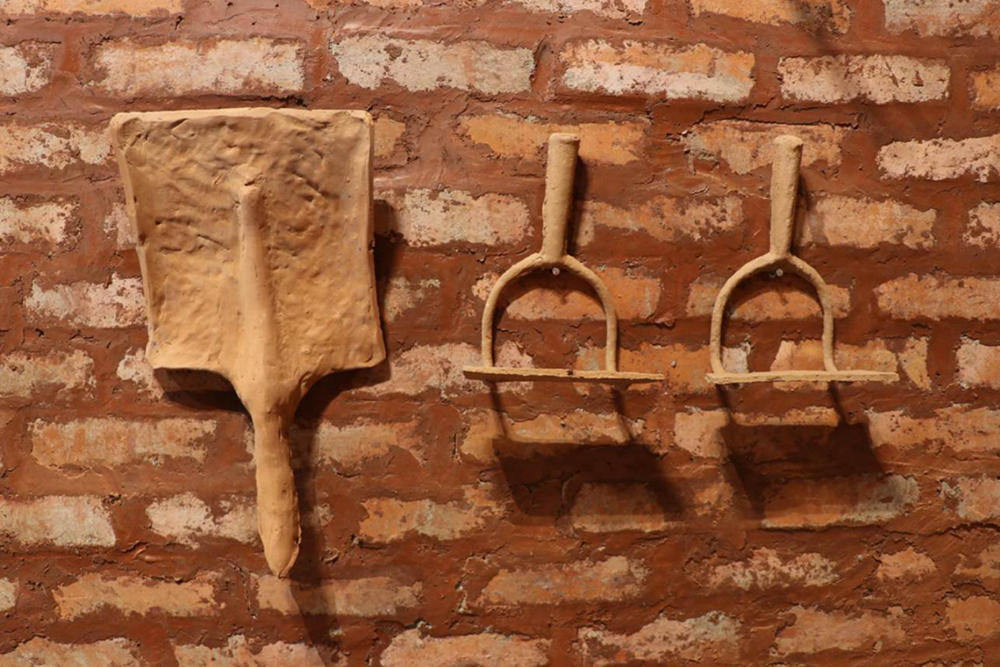
These castings, reframed as sculptures,include bottles, cloth bundles, tools, and clothing. Each object carries a slight variation createdby the worker who once used it—a surrogate presence standing in for each worker, subtlyasserting their individual identity in a sea of equally – sized and spaced bricks. The installation presents the worker’s body, their labour, and the material they handle, i.e. the earth, in amanner so deeply enmeshed with each other that each carries the memory of the other.The installation stays true to the structure of a brick kiln with terracotta sculptures reminiscentof the chimney flue mounted on a podium at its centre. The gestures of pressing, crushing, andcasting the earth into bricks at the kilns are abstracted in Yadav’s accompanying drawings onpaper, incorporating the soil and dust from the kiln site. The installation envelops viewers inthe reddish hue of clay, concentrating centuries of labour, labour-knowledge, and crafts personship into a single site. The installation evokes the textures of memory rather thanthe indexicality of lived experience, gesturing at the traces of what mis left behind—the toil,knowledge, struggle, and ingenuity that such a space may have once held.
–APARNA CHIVUKULA







PRESS :
“At the Kochi Art Biennale, South Asia Meets Brazil” | The New York Times | 21st Jan, 2026
Meera Menezes | “6th Kochi-Muziris Biennale” | Art Forum
Sindhu Nair | “The City as Host: The Return of the Kochi Muziris Biennale” | Scale | 30th Dec, 2025
V Shoba | “Being Amazed by Kochi-Muziris Biennale” | Open The Magazine | 18th Dec, 2025